
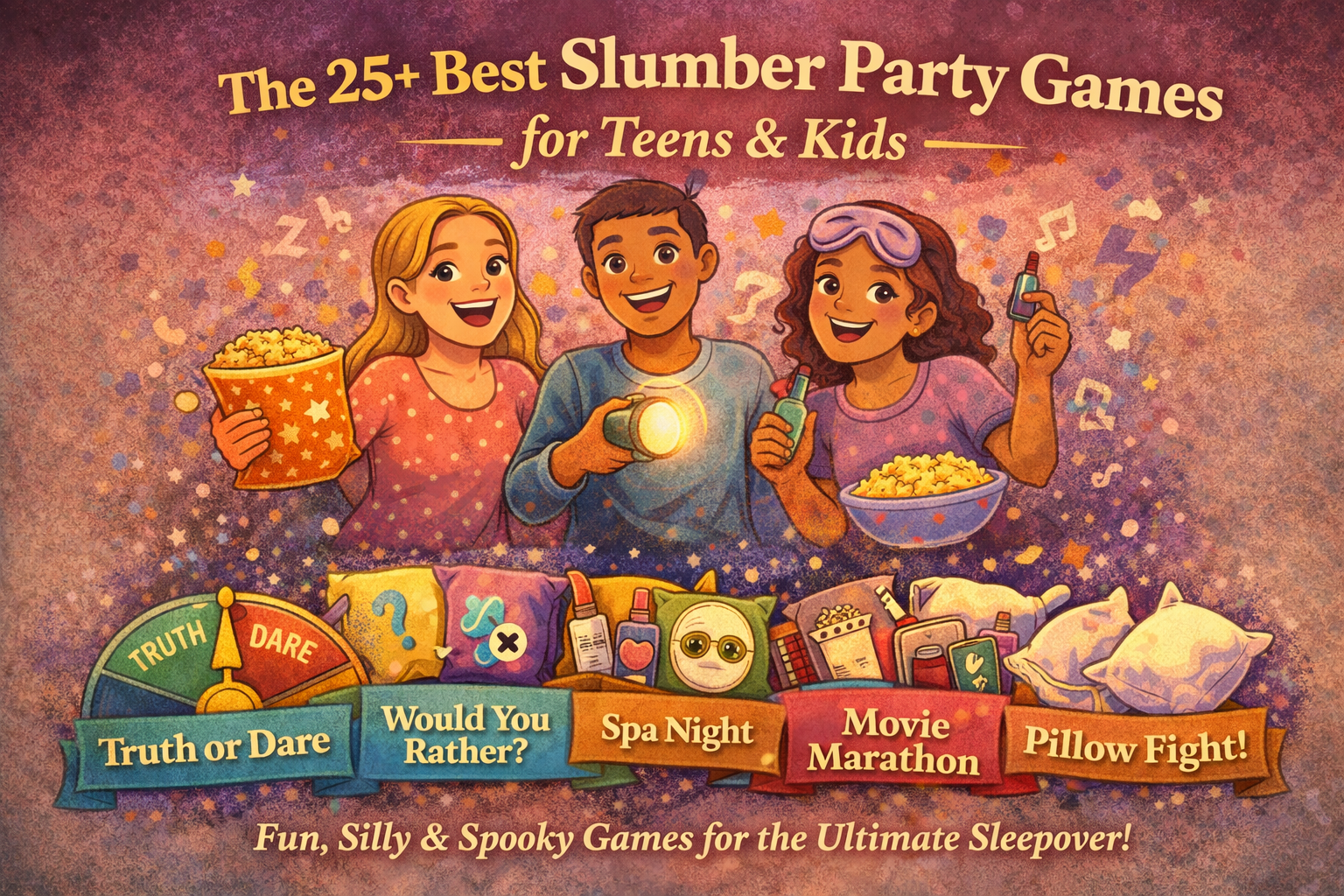
Why Slumber Party Games Are the Secret to Unforgettable Sleepovers
Let’s be real: a slumber party without games is just a group of kids scrolling on their phones in the same room. Games transform a regular hangout into a night of laughter, connection, and core memories.
Whether you’re hosting a room full of energetic 8-year-olds or a squad of savvy teens, the right games:
✅ Break the ice and ease social anxiety
✅ Keep energy balanced (no chaotic meltdowns at 2 AM)
✅ Create inside jokes and shared stories
✅ Give structure without feeling “planned”
That’s why we’ve curated 25+ original, age-tested slumber party games designed for maximum fun and minimal stress. No complicated rules. No expensive supplies. Just simple, engaging activities that work for kids, tweens, and teens.
🎯 How to Choose the Right Games for Your Group
Before diving into the list, consider:
🔹 Age range: Mix games for different maturity levels if hosting a wide age group
🔹 Group size: Some games work better with 4 people; others shine with 10+
🔹 Energy level: Balance high-energy games with cozy wind-down activities
🔹 Space: Dorm room? Backyard? Living room? Choose games that fit your venue
🔹 Supplies: Prioritize low-prep games unless you’re ready to craft
Pro Tip: Poll your guests ahead of time! Ask: “What kind of games do you love: silly, creative, competitive, or chill?” Buy-in = better participation.
👉 Take the Rice Purity Test now and see where you stand!
🎲 10 Hilarious & High-Energy Games (Perfect for Kickoff)
Get the giggles started with these laugh-out-loud favorites:
1. Two Truths and a Lie: Slumber Edition
How to play: Each person shares three statements about themselves—two true, one false. The group guesses the lie.
Why it works: Reveals fun facts, sparks conversation, and requires zero prep.
Teen twist: Add a “spicy” category for older groups (keep it age-appropriate!).
Supplies: None
2. Sleepover Scavenger Hunt
How to play: Create a list of silly items to find around the house: “Something blue,” “A snack with crunch,” “A photo of you making a funny face.” Set a timer!
Why it works: Gets kids moving, encourages teamwork, and adapts to any space.
Pro Tip: Use phone cameras for “photo challenges” to capture memories.
Supplies: Printed list, timer, phones (optional)
3. Emoji Pictionary
How to play: One player draws a movie, song, or phrase using only emojis. Others guess what it is.
Why it works: Taps into digital-native creativity; hilarious when guesses go off-track.
Teen upgrade: Use trending memes or TikTok sounds as prompts.
Supplies: Paper, markers, or a shared notes app
👉 20 of the most common hug types
4. Would You Rather: Sleepover Style
How to play: Ask playful dilemmas: “Would you rather have to whisper for a week OR talk in rhymes?” Players move to opposite sides of the room to show their choice.
Why it works: Sparks debate, reveals personalities, and gets everyone moving.
Sample questions:
- “Would you rather never use social media again OR never watch movies again?”
- “Would you rather have a pet dragon OR a pet unicorn?”
Supplies: List of questions (or use a free app)
5. The Floor Is Lava: Obstacle Course Edition
How to play: Classic rule: don’t touch the floor! Add pillows, blankets, and furniture to create a safe-path obstacle course.
Why it works: Physical, imaginative, and endlessly adaptable.
Safety note: Clear breakable items first!
Supplies: Pillows, blankets, couch cushions
6. Sleepover Charades
How to play: Act out sleepover-themed prompts: “brushing teeth at 2 AM,” “trying to be quiet while everyone sleeps,” “midnight snack raid.”
Why it works: Silly, inclusive, and no speaking required—great for shy kids.
Pro Tip: Let guests write their own prompts for extra personalization.
Supplies: Slips of paper, bowl, timer
👉 50+ original, adult-tested party games
7. Human Bingo
How to play: Create bingo cards with squares like “Has a pet,” “Can do a cartwheel,” “Loves pineapple on pizza.” Guests mingle to find matches.
Why it works: Encourages conversation, helps new friends connect, and feels like a game, not an icebreaker.
Supplies: Printed bingo cards, pens
8. Pass the Pillow: Truth or Dare Lite
How to play: Sit in a circle. Pass a pillow while music plays. When it stops, the holder picks “truth” or “dare” from a pre-approved jar.
Why it works: Adds suspense, keeps everyone engaged, and lets you control question difficulty.
Supplies: Pillow, music source, truth/dare slips
9. Sleepover Pictionary: Quick Draw
How to play: 30-second rounds! One player draws a sleepover-related word; team guesses fast.
Why it works: Fast-paced, low-pressure, and hilarious when drawings go sideways.
Word ideas: “pillow fight,” “midnight snack,” “bad hair day,” “flashlight tag”
Supplies: Whiteboard or paper, markers, timer
👉 40+ original talking games for friends
10. The Great Pillow Fort Challenge
How to play: Teams have 15 minutes to build the most creative pillow fort. Judge categories: Coziest, Tallest, Most Creative.
Why it works: Collaborative, imaginative, and doubles as a cozy hangout spot for later.
Supplies: Pillows, blankets, clothespins or clips, chairs
🌙 8 Cozy & Creative Games (Perfect for Wind-Down)
When energy dips and pajamas are on, switch to these calming favorites:
11. Story Chain: Once Upon a Sleepover
How to play: One person starts a story with one sentence. Each player adds a sentence, building a wild, collaborative tale.
Why it works: Sparks creativity, encourages listening, and often ends in giggles.
Pro Tip: Record the story on a phone to share later!
Supplies: None (or paper to write it down)
12. DIY Friendship Bracelet Station
How to play: Set up a craft corner with embroidery floss, beads, and simple tutorials. Guests make bracelets to exchange.
Why it works: Calming, creative, and guests leave with a meaningful souvenir.
Supplies: Embroidery floss, beads, scissors, tape
👉 250+ original, laugh-out-loud funny nicknames
13. Midnight Mindfulness: Guided Relaxation
How to play: Play a short, kid-friendly guided meditation or breathing exercise. Add soft lighting and cozy blankets.
Why it works: Helps overstimulated kids reset; teaches valuable coping skills.
Pro Tip: Use free apps like Insight Timer or YouTube for age-appropriate tracks.
Supplies: Speaker, blankets, dimmable lights
14. Guess the Song: Lullaby Edition
How to play: Hum or whistle a popular song (kid-friendly hits, Disney tunes, TikTok sounds). Others guess the title.
Why it works: Quiet enough for late night, nostalgic, and inclusive of different music tastes.
Supplies: List of songs, optional speaker for verification
15. Sleepover Time Capsule
How to play: Each guest writes/draws something about tonight: a favorite memory, a hope for the future, a funny moment. Seal in a decorated box to open at a future reunion.
Why it works: Meaningful, reflective, and creates a tangible memory.
Supplies: Paper, pens, small box, decorations
16. Stargazing Stories (Indoor or Outdoor)
How to play: Lie on blankets. Take turns sharing: “A time I felt brave,” “My favorite dream,” or “Something I’m grateful for.”
Why it works: Builds emotional connection in a low-pressure way; perfect for pre-sleep bonding.
Supplies: Blankets, optional fairy lights or projector for “stars”
👉 50+ original, student-tested college party themes
17. DIY Spa Station: Mini Makeovers
How to play: Set up a “spa corner” with face masks (kid-safe), nail polish, hair clips, and silly hats. Guests give each other gentle, fun makeovers.
Why it works: Calming, creative, and lets kids feel pampered.
Safety note: Use hypoallergenic products; avoid eyes.
Supplies: Kid-safe face masks, nail polish, hair accessories, towels
18. Gratitude Glow: Flashlight Sharing
How to play: Turn off lights. Pass a flashlight. Whoever holds it shares one thing they’re grateful for today.
Why it works: Ends the night on a positive, reflective note; the flashlight adds playful magic.
Supplies: One flashlight, cozy seating
🎯 7 Competitive & Skill-Building Games (For Friendly Rivalry)
Channel that sleepover energy into playful competition:
19. Sleepover Trivia: Pop Culture Edition
How to play: Teams answer questions about movies, music, games, and trends. Mix easy and challenging questions.
Why it works: Engages different knowledge areas; lets kids shine in their expertise.
Sample questions:
- “What’s the name of the wizard school in Harry Potter?”
- “Which TikTok dance went viral in 2024?”
Supplies: Question list, scorecard, buzzer (or just shout!)
👉 150+ original, hand-crafted Truth or Dare questions
20. The Great Sleepover Bake-Off (No-Oven Edition)
How to play: Teams create no-bake treats: decorated rice cereal treats, fruit skewers, or yogurt parfaits. Judge on creativity, taste, and presentation.
Why it works: Hands-on, delicious, and teaches basic kitchen skills.
Safety note: Adult supervision for any prep involving knives or heat.
Supplies: Pre-made bases (cereal treats, graham crackers), toppings, plates
21. Minute to Win It: Sleepover Challenges
How to play: 60-second challenges using household items: “Stack 10 cups with one hand,” “Move cotton balls with a straw,” “Balance a spoon on your nose.”
Why it works: Fast, funny, and adaptable to any skill level.
Supplies: Cups, cotton balls, straws, spoons, timer
22. Sleepover Pictionary: Speed Round Tournament
How to play: Bracket-style tournament! Winners advance; losers become cheerleaders.
Why it works: Adds stakes without pressure; keeps everyone engaged even after elimination.
Supplies: Whiteboard, markers, timer, bracket sheet
👉 How to improve your social life in college
23. The Silent Challenge
How to play: For 5 minutes, no talking allowed! Communicate only through gestures, drawings, or charades to complete a simple task (e.g., “build a tower”).
Why it works: Hilarious, builds nonverbal communication skills, and resets chaotic energy.
Supplies: Task cards, building materials (blocks, cups)
24. Sleepover Talent Showcase
How to play: Each guest performs a 1-minute talent: joke, dance move, magic trick, impression. Audience votes for fun categories: “Most Creative,” “Funniest,” “Best Surprise.”
Why it works: Celebrates individuality; builds confidence in a supportive setting.
Pro Tip: Keep it low-pressure—participation > perfection.
Supplies: Optional: phone to record, small prizes (stickers, candy)
25. The Ultimate Sleepover Quiz
How to play: Create a fun quiz about the guests: “Who’s most likely to…” or “Guess who said this quote from tonight?”
Why it works: Personal, nostalgic, and reinforces group bonding.
Supplies: Paper, pens, pre-written questions
👉 Ultimate collection of 100+ original Never Have I Ever questions
🌟 Bonus: 3 Wildcard Games for Adventurous Groups
26. Midnight Mystery: Solve the Case
How to play: Create a simple “mystery” (e.g., “Who ate the last cookie?”). Guests gather clues, interview each other, and solve the puzzle.
Why it works: Engages critical thinking; feels like an immersive adventure.
Supplies: Clue cards, notepads, “detective” props (optional)
27. Sleepover Escape Room: DIY Edition
How to play: Hide 3-5 puzzles around the room. Solve each to “unlock” the next clue and ultimately “escape” (or find the midnight snack!).
Why it works: Collaborative, immersive, and highly customizable.
Pro Tip: Use free online templates for puzzle ideas.
Supplies: Printed puzzles, envelopes, small locks or coded boxes
28. Dream Journal Art Party
How to play: After lights out, guests quietly draw or write about a dream (real or imagined). Share creations in the morning with hot cocoa.
Why it works: Calming, creative, and honors the magical, liminal space of sleepovers.
Supplies: Journals or paper, colored pencils, crayons
👉 What does your Rice Purity score says about your personality?
🎯 Pro Tips for Hosting a Stress-Free Slumber Party
📋 Before the Party
- Set clear expectations: Share start/end times, what to bring, house rules
- Prep a “game menu”: Let guests vote on 3-4 games to play—ownership = engagement
- Create a cozy zone: Designate a quiet corner for kids who need a break
- Safety first: Share emergency contacts; establish check-in times for parents
🎲 During the Party
- Read the room: If a game isn’t landing, pivot gracefully. Have 1-2 backup options ready.
- Balance energy: Follow high-energy games with calming activities to avoid burnout
- Include everyone: Adapt rules so all skill levels can participate; avoid elimination games that leave kids out
- Capture memories: Designate a “photographer” or create a shared photo album
🌙 Wind-Down Strategy
- Start calming activities 60-90 mins before target bedtime
- Dim lights, lower music volume, switch to quieter games
- Offer a “quiet kit”: Eye masks, earplugs, fidget toys for sensitive sleepers
- End with gratitude: A quick round of “favorite moment tonight” closes the night positively
Conclusion: Games Are Just the Beginning
The best slumber party games aren’t about perfect execution—they’re about creating space for laughter, connection, and the kind of memories kids carry into adulthood.
You don’t need fancy supplies or flawless facilitation. You just need presence, flexibility, and a willingness to embrace the beautiful chaos of kids being kids.
So pick 3-4 games from this list. Gather your crew. Hit play on the fun. And when the sun comes up and sleepy faces start heading home, you’ll know: it wasn’t just a party. It was a moment they’ll remember.
Frequently Asked Questions
What age is appropriate for slumber parties?
Most kids are ready for their first sleepover between ages 6-8. Start with short, parent-present gatherings for younger kids. Teens can handle more independence—but always confirm comfort levels with parents.
How many games should I plan?
Plan 4-6 games for a 4-6 hour party. Leave room for free play, snacks, and downtime. Over-scheduling kills the magic.
What if a guest gets homesick or anxious?
Normalize the feeling: “It’s okay to miss home.” Offer a quiet space, a phone call to parents, or a calming activity. Never force participation.
How do I handle different age groups?
Choose universally appealing games (charades, scavenger hunts). Pair older kids with younger ones as “team captains.” Have age-specific backup activities ready.
Can slumber party games work for virtual sleepovers?
Absolutely! Adapt games for video calls: emoji pictionary via screen share, virtual scavenger hunts (“find something fuzzy!”), or collaborative storytelling.