
Why Understanding Hug Meanings Matters (More Than You Think)
Hugs are universal—but they’re never simple.
A single embrace can communicate comfort, attraction, politeness, grief, celebration, or boundary-setting—sometimes all at once. In a world where words often fall short, hugs become a powerful form of nonverbal communication.
Research in psychology and body language shows that touch releases oxytocin (the “bonding hormone”), reduces stress, and builds trust. But the way someone hugs you—their posture, pressure, duration, and placement—reveals layers of intention that words might never capture.
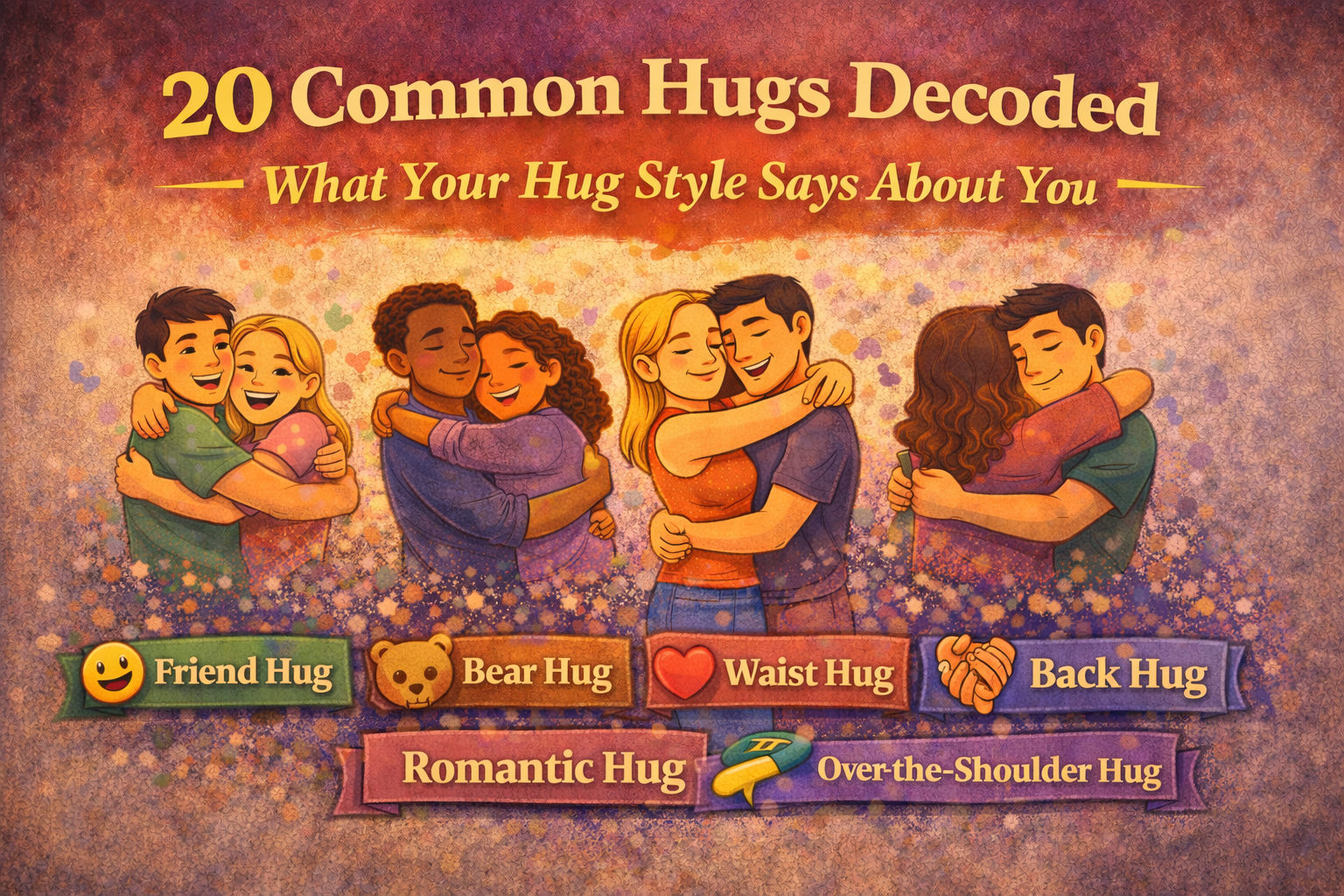
That’s why we’ve decoded 20 of the most common hug types, explaining what each typically communicates about the relationship, emotional state, and unspoken message. Whether you’re navigating new romance, strengthening friendships, or simply curious about human connection, this guide will help you read the room—and the embrace.
Note: Context always matters. Cultural norms, personal boundaries, and individual personality shape how hugs are given and received. Use these insights as guides, not absolutes.
👉 Take the Rice Purity Test now and see where you stand!
🤗 The 20 Most Common Hugs—And What They Really Mean
1. The Side Hug (A-Frame Hug)
What it looks like: One arm around the shoulder or waist; bodies angled away, minimal torso contact.
What it means: Friendly, polite, low-intimacy. Often used in professional settings, group photos, or with acquaintances. Signals warmth without romantic intent.
Watch for: If someone consistently offers side hugs when others get full embraces, they may be maintaining emotional distance.
2. The Full Frontal Embrace
What it looks like: Chest-to-chest contact, both arms wrapped around, faces close or turned to the side.
What it means: Genuine affection, comfort, or deep connection. Common between close friends, family, or romantic partners. Duration matters: a quick squeeze = greeting; a longer hold = emotional support.
Watch for: Relaxed shoulders and gentle pressure signal safety; stiff posture may indicate obligation.
👉 50+ original, adult-tested party games
3. The Back Hug
What it looks like: One person wraps arms around the other from behind, often resting chin on shoulder.
What it means: Protective, intimate, and often romantic. Common between partners. In friendships, may signal playful closeness—but context is key.
Watch for: If unsolicited, this hug can feel invasive. Consent and comfort are essential.
4. The Quick Pat Hug
What it looks like: Brief embrace with 1-2 pats on the back, minimal body contact.
What it means: Polite, functional, emotionally distant. Common in professional settings or with people you don’t know well. The pats often signal “okay, we’re done now.”
Watch for: If a close friend gives this, they may be distracted, uncomfortable, or setting a boundary.
5. The Lift-and-Spin Hug
What it looks like: One person lifts the other slightly while hugging, often with a spin or bounce.
What it means: Joyful, celebratory, high-energy affection. Common in reunions, good news moments, or playful relationships. Signals excitement and emotional safety.
Watch for: Requires mutual trust and physical comfort. Not appropriate in formal or new relationships.
👉 40+ original talking games for friends
6. The One-Arm Hug
What it looks like: Single arm draped over shoulder or around waist; bodies partially angled.
What it means: Casual, friendly, or transitional. Often used when walking together, in photos, or when one person is holding something. Can signal “I like you, but I’m keeping options open.”
Watch for: In romantic contexts, may indicate hesitation or mixed signals.
7. The Head-on-Chest Hug
What it looks like: One person rests their head on the other’s chest or shoulder during the embrace.
What it means: Seeking comfort, vulnerability, or emotional support. Common in romantic relationships or close friendships during tough times. Signals trust and a desire to be cared for.
Watch for: If one-sided consistently, may indicate emotional dependency.
8. The Waist Hug
What it looks like: Hands placed on the lower back or waist; bodies close, often with slight lean-in.
What it means: Romantic or flirtatious interest. More intimate than shoulder hugs. Common in dating or established partnerships.
Watch for: In new relationships, this hug may test boundaries—pay attention to reciprocity.
👉 250+ original, laugh-out-loud funny nicknames
9. The Group Hug (Bear Hug Circle)
What it looks like: Three or more people embracing in a circle or cluster.
What it means: Unity, celebration, shared emotion. Common after achievements, during grief, or in tight-knit communities. Signals belonging and collective support.
Watch for: Ensure everyone consents—some people dislike group touch.
10. The Polite Distance Hug
What it looks like: Upper bodies touch lightly; lower bodies remain distant; arms briefly loop around shoulders.
What it means: Social obligation, cultural norm, or cautious friendliness. Common in formal gatherings, with in-laws, or in cultures where touch is reserved.
Watch for: Not a reflection of personal feelings—often about context, not connection.
11. The Swaying Hug
What it looks like: Gentle side-to-side rocking motion during the embrace.
What it means: Deep comfort, nostalgia, or emotional intimacy. Often seen between parents and children, long-term partners, or close friends reuniting. Signals safety and shared history.
Watch for: A powerful bonding gesture—reciprocate if you’re comfortable.
👉 25+ original, age-tested slumber party games
12. The “Hello/Goodbye” Quick Squeeze
What it looks like: Brief, firm embrace lasting 1-2 seconds, often with a light pat.
What it means: Friendly acknowledgment, social ritual. Common in workplaces, schools, or casual friendships. Signals “I see you” without deep emotional investment.
Watch for: Consistency matters—if someone usually gives longer hugs but switches to quick squeezes, something may be off.
13. The Protective Hug
What it looks like: One person wraps arms tightly around the other, often shielding them slightly with their body.
What it means: Care, concern, or desire to comfort. Common when someone is upset, scared, or vulnerable. Signals “I’ve got you.”
Watch for: Ensure the recipient welcomes this—protection without consent can feel smothering.
14. The Flirtatious Lean-In Hug
What it looks like: Close body contact, lingering hands, slight lean-in with eye contact before or after.
What it means: Romantic or sexual interest. Often a testing gesture to gauge reciprocity. Common in early dating or flirtatious friendships.
Watch for: Pay attention to other cues: smile, eye contact, verbal follow-up.
👉 50+ original, student-tested college party themes
15. The Awkward Hover Hug
What it looks like: Hesitant arm placement, stiff posture, minimal contact, quick release.
What it means: Uncertainty, discomfort, or mismatched expectations. Common when hug styles differ or boundaries aren’t clear.
Watch for: A chance to communicate preferences: “I’m more of a side-hug person!”
16. The Celebratory Jump Hug
What it looks like: Both people jump slightly while embracing, often with laughter or cheers.
What it means: Shared excitement, triumph, or joyful surprise. Common after good news, reunions, or achievements. Signals mutual enthusiasm and emotional alignment.
Watch for: Requires physical coordination and mutual comfort—best with people you know well.
17. The Comforting Rock Hug
What it looks like: Seated or standing embrace with gentle rocking motion, often with hand rubs on the back.
What it means: Deep empathy, emotional support, or grief sharing. Common in moments of loss, stress, or vulnerability. Signals “I’m here with you.”
Watch for: Silence is okay—this hug often speaks louder than words.
👉 150+ original, hand-crafted Truth or Dare questions
18. The Possessive Hug
What it looks like: Tight grip, hands placed firmly on lower back or waist, body positioned to “block” others.
What it means: Romantic claim, jealousy, or desire for exclusivity. Can feel affirming in secure relationships but controlling in uncertain ones.
Watch for: Consent and comfort are critical. Healthy possession feels safe; unhealthy feels restrictive.
19. The Friendly Shoulder Squeeze
What it looks like: One hand on shoulder, brief pressure, often with a smile or nod.
What it means: Encouragement, camaraderie, or light affection. Common among teammates, coworkers, or casual friends. Signals “I see you and I’m on your side.”
Watch for: A low-risk way to show support without overstepping.
20. The Lingering Goodbye Hug
What it looks like: Embrace held slightly longer than usual, often with a slow release and eye contact.
What it means: Reluctance to part, deep affection, or emotional significance. Common in romantic relationships, close friendships, or meaningful farewells. Signals “I’ll miss you.”
Watch for: Duration + body language = message. A lingering hug with a smile = warmth; with tension = unspoken worry.
👉 How to improve your social life in college
🔍 How to Read Hug Body Language Like a Pro
Hugs are complex. To interpret them accurately, consider these layers:
✅ The 4 C’s of Hug Analysis
- Context: Where and when did the hug happen? (Work party vs. late-night text meetup)
- Consistency: Does this hug match how they usually embrace you? Changes signal shifts.
- Comfort: Are both people relaxed? Stiffness, quick releases, or avoidance reveal boundaries.
- Connection: What happens before and after? Eye contact, words, and follow-up actions matter.
🚩 Red Flags to Notice
- Hugs that feel invasive or unsolicited
- Pressure to accept a hug style you’re uncomfortable with
- Mixed signals (e.g., intimate hug + distant behavior afterward)
- Using hugs to manipulate or control
👉 Ultimate collection of 100+ original Never Have I Ever questions
💡 Pro Tips for Healthier Hugging
- Ask first: “Are you a hugger?” respects boundaries.
- Match energy: If someone offers a quick squeeze, don’t pull them into a 10-second embrace.
- Communicate preferences: “I love side hugs!” reduces awkwardness.
- Notice reciprocity: Healthy hugs feel mutual, not one-sided.
Conclusion: Hugs Are Conversations Without Words
Every embrace tells a story—of connection, caution, joy, or longing. By learning to read the subtle language of hugs, you deepen your ability to understand others and honor your own boundaries.
But remember: no guide replaces direct communication. If you’re unsure what a hug meant, it’s always okay to ask: “I loved that hug—what was going on for you in that moment?”
👉 What does your Rice Purity score says about your personality?
Because the most meaningful connections aren’t built on perfect interpretation. They’re built on curiosity, respect, and the courage to say: “Tell me what you need.”
So hug wisely. Listen closely. And let your embraces speak the truth your words sometimes can’t.
Frequently Asked Questions
Can hug meanings change across cultures?
Absolutely. In some cultures, hugs are reserved for family; in others, they’re common greetings. Always consider cultural context and individual preferences.
How do I know if a hug is romantic or just friendly?
Look for clusters of cues: waist placement, duration, eye contact, lean-in, and follow-up behavior. One signal isn’t enough—read the whole picture.
What if I misread a hug and make someone uncomfortable?
Apologize sincerely: “I didn’t mean to overstep.” Then adjust. Most people appreciate accountability and course-correction.
Can hug styles reveal personality traits?
Research suggests touch preferences correlate with attachment styles. Secure individuals often hug warmly; avoidant types may prefer distance. But never stereotype—individual variation is huge.
Is it okay to decline a hug?
Always. Your body, your boundaries. A simple “I’m not much of a hugger—can we do a wave?” is respectful and clear.